
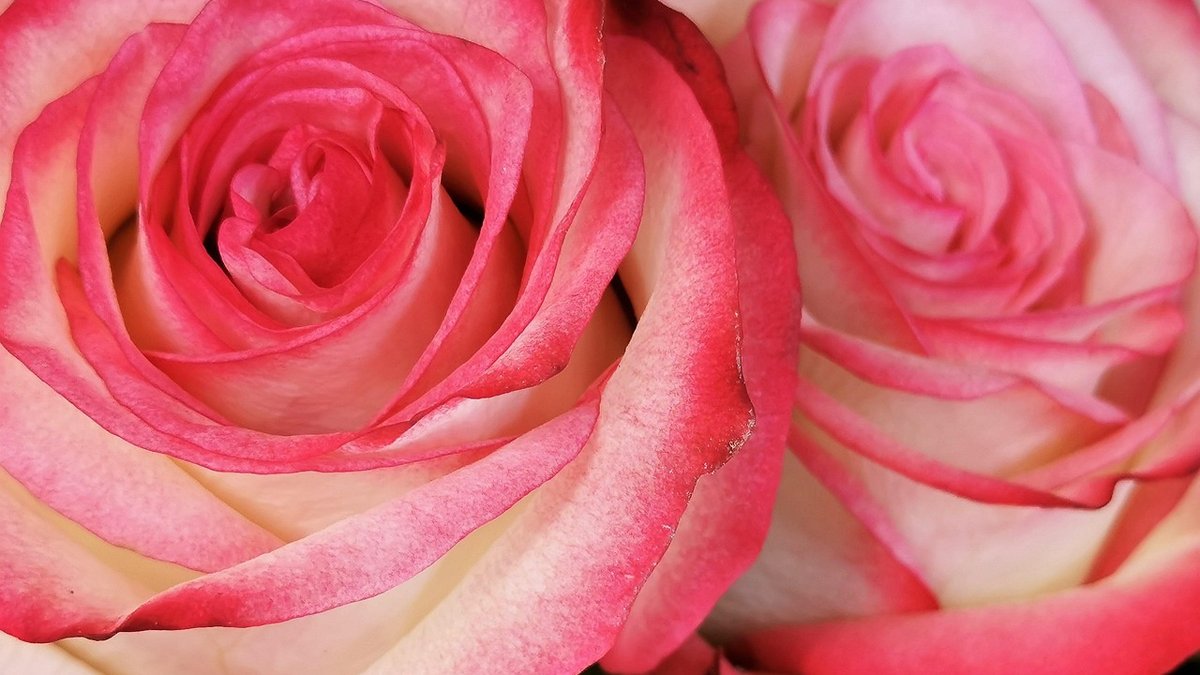
Roses are the quiet workhorse of wedding floristry. They arrive in every shade from chalky ivory to near-black, they hold their heads up without fuss, and they suit everything from a marquee in the Cotswolds to a candlelit dining room in town. For a centrepiece — the arrangement your guests will look at for three hours — that reliability matters far more than novelty.
A rose that has been properly conditioned will sit happily from the ceremony through to the last dance, and it will still look composed in the photographs. Garden roses bring scent and a soft, ruffled informality; florist's hybrid teas bring a crisp, classic silhouette. Mixing the two gives you both structure and romance, which is exactly what a top table or a long trestle of guests needs.
Start with the scheme, not the flower. If your palette is ivory and sage, roses in cream and pale green — think 'Avalanche' with eucalyptus — will look effortless. If you are working with deep jewel tones, 'Black Baccara' or 'Deep Secret' against dark foliage creates real drama under candlelight.
A few practical points worth remembering:
Ask your florist to see the roses in daylight next to a swatch of the bridesmaid fabric. Colours shift enormously between the bucket and the table.
Not every rose behaves well in a low bowl. The varieties that perform best in centrepieces are the ones with firm petals and a strong neck — the stem that supports the head.
Reliable choices include 'Akito' and 'Avalanche' for white, 'Sweet Avalanche' for blush, 'Naomi' and 'Vendela' for cream and pale pink, and 'Quicksand' for a soft antique mauve. For depth, 'Black Baccara' and 'Deep Secret' are unbeatable. Among garden roses, look for 'Darcey Bussell', 'Munstead Wood' and 'Desdemona' — generous, scented and surprisingly sturdy.
What you want to avoid are very open, floppy blooms that shatter within a day, and any rose that has already been sitting in a bucket for a week. Ask for roses cut at the right stage: firm, half-open buds will open on the table over the course of the day, which is exactly what you want.
The single most useful rule for a seated dinner is keep the arrangement below eye level — roughly 25–30cm from table to the top of the tallest bloom. Guests should be able to see the person opposite without ducking.
For a low bowl, build a compact dome: a base of foliage such as pittosporum, rosemary or eucalyptus, then roses placed in small clusters rather than evenly spaced. Grouping three or four of the same rose together gives a much more natural, garden-picked feel than dotting them one by one.
Bottles and bud vases are ideal for long tables and tighter budgets. A cluster of five or seven mismatched glass bottles, each holding one or two roses with a sprig of foliage, creates a lovely informal rhythm down the length of the table. Vary the heights slightly — 15cm, 20cm and 25cm works well — and repeat the cluster every 60–70cm.
If you want volume without height, consider a shallow bowl or a footed compote packed with roses and trailing foliage such as jasmine or ivy, so the arrangement cascades onto the cloth.
Preparation is where centrepieces are won or lost. Condition your roses at least twelve hours before the wedding: strip the lower leaves, cut each stem at a 45-degree angle with a sharp knife, and stand them in deep, cool water with flower food. Keep them somewhere dark and cold — a garage or a cool utility room is ideal — and never in direct sun.
On the day itself:
Finally, think about the morning after. Small bottle arrangements can be gathered up and given to guests, and low bowls can be moved to the breakfast room or a windowsill. Roses that have been well looked after will often carry on for four or five days — a small, generous echo of the day itself.

Hi, my name is Anthony kuber. I am artist and fashion designer.
I love to travel and writing blogging.
Your email address will not be published. Required fields are marked *
Software Developer & Writer
Hey, I'm Diva, a developer and writer blending code and creativity. I'm driven by a deep curiosity and a relentless pursuit of excellence. Join me as I craft digital solutions and captivating stories.


