
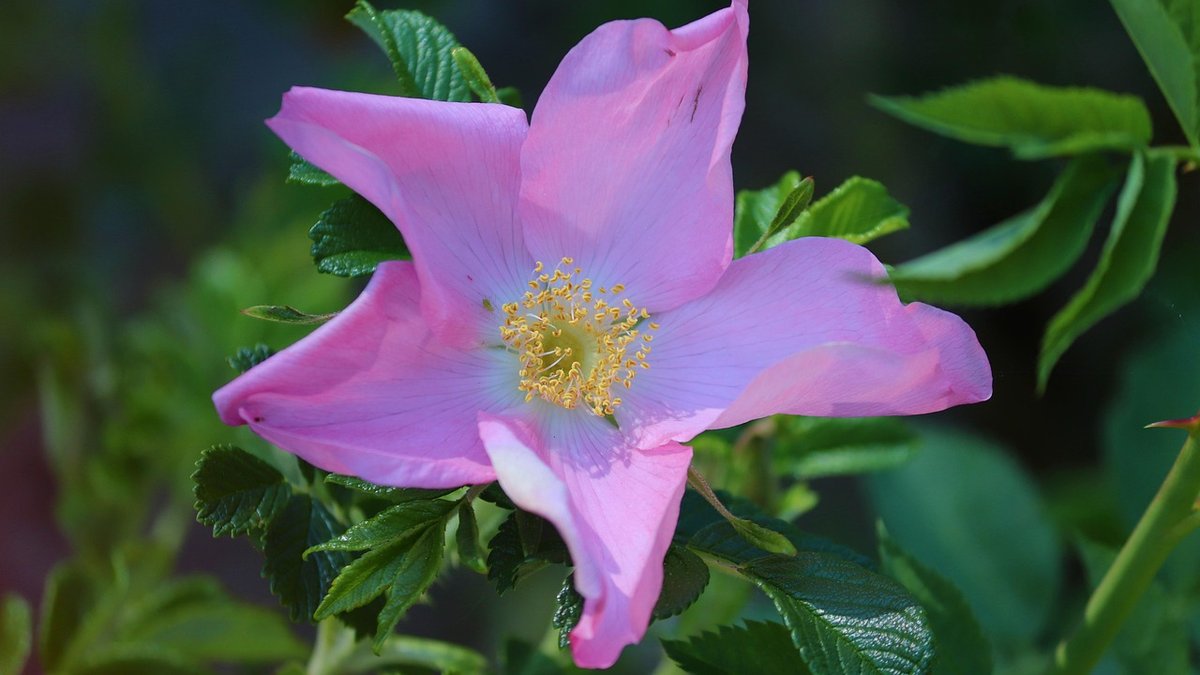
The traditional cottage garden had one quiet flaw: for six glorious weeks in June it was unbeatable, and then it rather ran out of steam. Once the old once-flowering roses and the bearded irises had finished, the border sat about looking tired until the dahlias arrived. Repeat flowering roses solve that problem beautifully.
These are the roses that bloom in early summer, rest briefly, then flower again in waves until the first hard frosts. In a mild autumn you can be cutting blooms well into October, sometimes November. They give the loose, generous look we all associate with cottage planting, but they keep doing it for four or five months rather than four or five weeks.
If you are planning a new border or reworking an old one, building the scheme around two or three repeat flowering roses gives you a backbone. Everything else — the spires, the froth, the scent — can then be arranged around them.
Look for the words repeat flowering, remontant or continuously flowering on the label. Within that group you have plenty of choice, and the differences matter when you are placing them.
If blackspot has been a problem in your garden before, spend a little time choosing resistant cultivars rather than fighting the inevitable. It is far less work than spraying.
The trick to a relaxed cottage scheme is contrast in shape as well as colour. Roses give you rounded, blowsy shapes; you need vertical spires and low, hazy mounds around them.
Round it out with lady's mantle, hardy geraniums, salvia and a few annuals such as nigella or cornflower, and you have a border that changes week by week without ever looking empty.
Cottage gardens are informal, not careless. Plant bare-root roses between November and March if you can; containerised roses will establish at any time, provided you water them through their first summer.
Set shrub roses roughly 60–90cm apart and give climbers a metre of clear wall or fence. Dig a hole wider than it is deep, fork the base, and mix in two or three spadefuls of well-rotted manure plus a handful of grit if your soil is heavy clay. Plant so the graft union sits just below soil level, firm well, and water in thoroughly.
Mulch 5–7cm deep each March with composted bark or manure, keeping it clear of the stems. This suppresses weeds, holds moisture and, usefully, reduces the splash that spreads blackspot spores up onto the leaves.
Repeat flowering only works if the plant has the energy to do it. Feed with a balanced rose fertiliser as the first buds swell in spring, then again immediately after the first flush fades. Stop feeding by the end of July so the new growth can harden before winter.
Deadhead regularly, cutting back to a strong outward-facing bud just above a five-leaflet leaf. This directs energy into fresh flowers rather than hips. Once the second flush finishes in late September, ease off and let some hips form — they look lovely with the autumn foliage.
Prune shrub roses in late February or early March, removing old, weak and crossing stems and shortening the rest by about a third. Climbers get a lighter tidy in autumn and their main prune in winter. A fortnightly check for aphids is usually enough; a firm jet of water or a resident ladybird population will deal with most of them.
Cut roses in the early morning, when the stems are full of water. Strip the lower leaves, split the woody base of each stem about 2cm with a sharp knife, and stand them in deep, cool water for a few hours before arranging.
For a cottage look, work in odd numbers and mix heights rather than making a tight dome. A jug of 'Buff Beauty' with catmint, a few lavender stems and some alchemilla is hard to beat. Keep the vase out of direct sun and change the water daily — you will get a week, sometimes more.

Hi, my name is Anthony kuber. I am artist and fashion designer.
I love to travel and writing blogging.
Your email address will not be published. Required fields are marked *
Software Developer & Writer
Hey, I'm Diva, a developer and writer blending code and creativity. I'm driven by a deep curiosity and a relentless pursuit of excellence. Join me as I craft digital solutions and captivating stories.


