
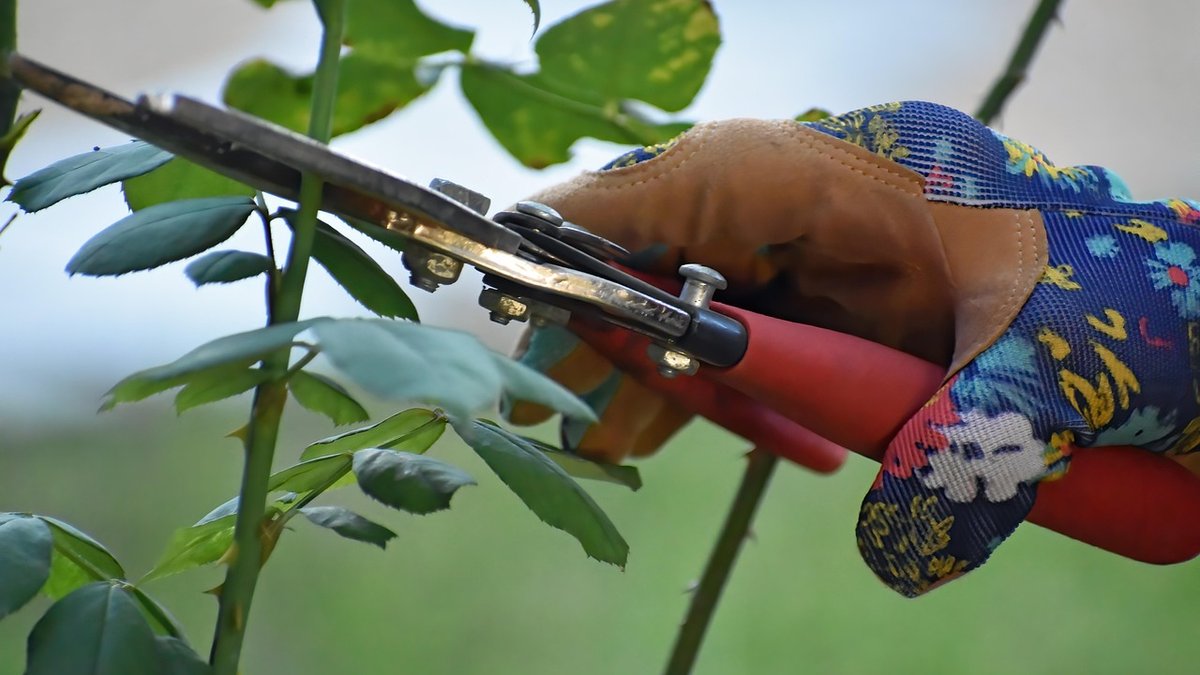
Roses are famously hungry plants. A climbing rose in full flower can push out new growth, buds and blooms for months on end, and it does all of that from whatever it can find in the soil. In most British gardens, that soil simply will not keep up on its own. Feed your roses properly and you will see it in bigger blooms, deeper colour, stronger scent and foliage that stays glossy and disease-resistant right through to autumn. Leave them to fend for themselves and they will sulk: pale leaves, blind shoots, and a flush of flowers in June followed by very little afterwards.
The good news is that feeding roses is not complicated. It is mostly about timing, consistency and a little understanding of what the plant is doing at each point in the year.
In most of the UK, begin feeding in late March or early April, once the worst of the frosts have passed and you can see fresh growth breaking from the buds. Feeding too early is a waste — the roots are barely active and heavy rain will simply wash nutrients away. Wait until the first leaves are unfurling, then start.
If you pruned in late winter, this first feed is the signal that the growing season has begun. Give established roses a generous handful of balanced granular rose food, scattered evenly around the drip line rather than piled against the stem. Work it lightly into the surface with a hand fork, then water it in if the weather stays dry.
Container roses need a slightly earlier start, as their compost holds far fewer nutrients. Begin feeding them as soon as you see new shoots, and expect to feed far more often than you would a rose in open ground.
A dedicated rose fertiliser is the simplest option and it will usually give you roughly the right balance: nitrogen for leafy growth, phosphorus for roots and flowers, and potassium for bloom quality and disease resistance. Look for a formulation with a sensible balance plus magnesium, which roses crave.
Whatever you choose, always read the label and stick to the recommended rate. More is not better. Overfeeding pushes soft, sappy growth that aphids adore and blackspot loves.
For roses in the ground, a straightforward pattern works well. Feed in late March as growth begins, again in early June just as the first flush of flowers is finishing, and a final time in mid-July to support the second flush and late-season blooms. That is three solid feeds, with a liquid tonic in between if plants are looking peaky.
Container roses need a different rhythm: a diluted liquid feed every two weeks from April to August, or a slow-release granules topped up monthly. They are entirely dependent on you for nutrition, so do not skip a fortnight.
Water before you feed, never onto dry soil, and avoid scattering granules onto foliage. After feeding, a thorough soak helps nutrients reach the root zone where they are actually needed.
Feeding alone will not transform a rose if the soil is dry and lifeless. A generous mulch of well-rotted manure or garden compost, applied in early spring to a depth of about five to eight centimetres, keeps moisture in, suppresses weeds and slowly feeds the soil. Keep the mulch a few centimetres clear of the stem to avoid rotting the graft.
Watering matters just as much. Roses want a deep soak rather than a daily sprinkle — around ten litres per plant per week in dry weather, delivered to the base rather than over the leaves. Watering in the morning is best, giving foliage time to dry before evening and reducing the risk of blackspot and mildew.
Stop feeding in late summer. In most UK gardens, mid-August is the cut-off for anything high in nitrogen. Feeding beyond that encourages soft new growth that will not harden off before the cold arrives, and that is exactly the growth that gets damaged by winter frost and disease.
You can continue a potassium-rich liquid feed into early September to help blooms and roots, but then let the plant wind down naturally. Cease all feeding by the end of September, and do not feed container roses after that either — they need to slow down just as much as plants in the ground.
Read your roses as the season goes on. Lush dark leaves and repeat flowering mean you have got it right. Pale, small leaves, weak stems or a sudden stall in flowering are your cue to check the feeding, the watering and the mulch in that order. Get those three working together and your roses will reward you from the first flush in June right through to the last blooms of autumn.

Hi, my name is Anthony kuber. I am artist and fashion designer.
I love to travel and writing blogging.
Your email address will not be published. Required fields are marked *
Software Developer & Writer
Hey, I'm Diva, a developer and writer blending code and creativity. I'm driven by a deep curiosity and a relentless pursuit of excellence. Join me as I craft digital solutions and captivating stories.


